
 SpectraDx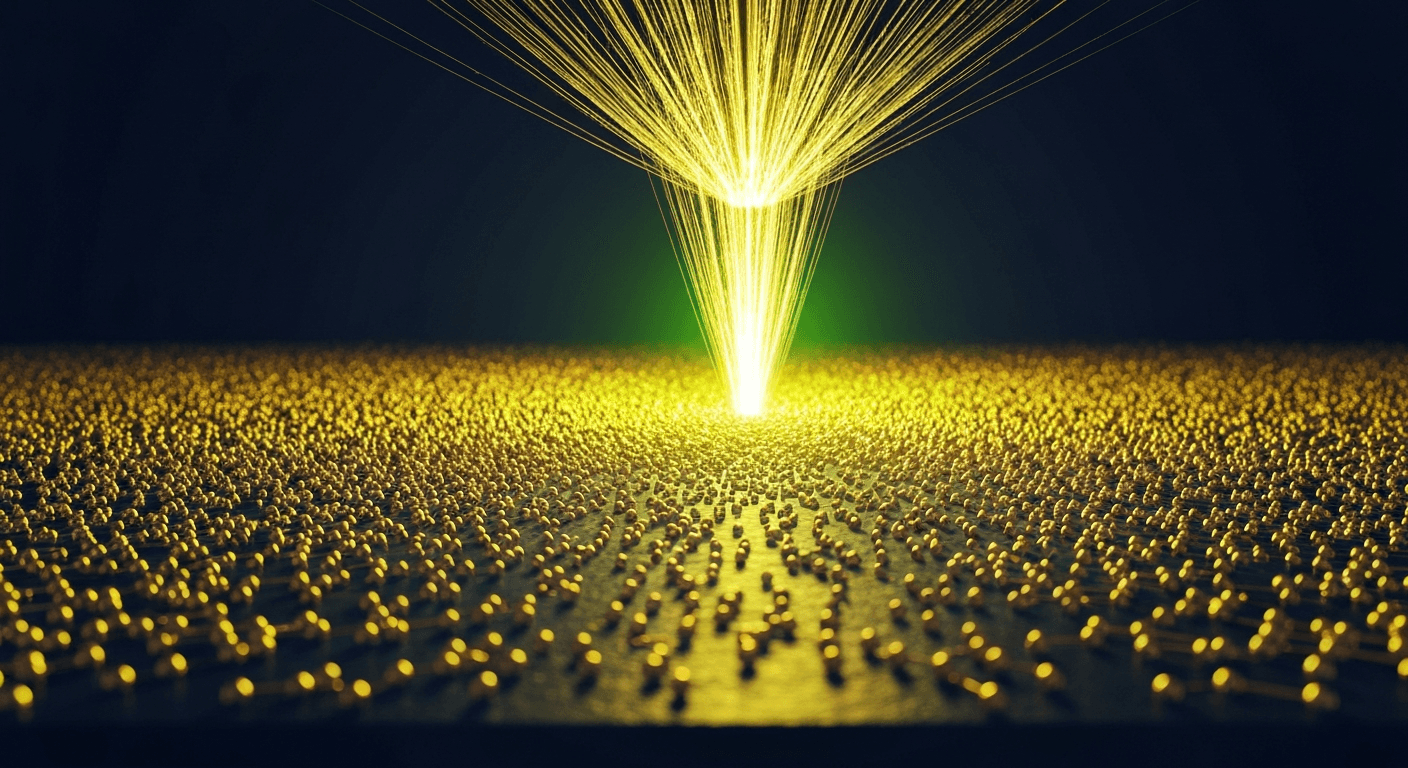
Conventional Raman spectroscopy identifies molecules by their vibrational fingerprint - a capability that makes it invaluable for drug identification, bacterial classification, and clinical diagnostics. But Raman scattering is inherently weak. Roughly one in every 10^7 photons undergoes inelastic scattering. For trace-level analytes in biological matrices - a cardiac biomarker at picograms per milliliter, a pathogen antigen at femtomolar concentrations - conventional Raman does not have the sensitivity.
Surface-Enhanced Raman Spectroscopy changes this equation by 6 to 10 orders of magnitude. A molecule adsorbed onto or near a nanostructured metallic surface produces a Raman signal that is 10^6 to 10^10 times stronger than it would in free solution. This amplification, combined with Raman's molecular specificity, creates a detection platform that approaches the sensitivity of mass spectrometry while retaining the portability and speed of optical spectroscopy.
SERS-based point-of-care diagnostics are not yet FDA-cleared or CE-marked. But they are no longer theoretical. A 2025 Nature Communications study validated a SERS lateral flow immunoassay for drug-induced liver injury across 199 clinical serum samples. A 2025 Advanced Science paper demonstrated SERS-based sepsis staging at femtomolar detection limits with 95% accuracy. Clinical trials for SERS-based lung cancer screening are registered and recruiting.
This article is a complete reference: how SERS works, which substrate technologies are viable for clinical use, what clinical applications have the strongest evidence, and what software challenges remain before SERS diagnostics reach routine clinical practice.
SERS Enhancement Mechanisms
SERS amplification arises from two mechanisms that operate simultaneously.
Electromagnetic enhancement
The dominant mechanism. When incident laser light strikes a metallic nanostructure - a gold nanoparticle, a silver nanopillar, a lithographically patterned array - it can excite localized surface plasmon resonances (LSPRs): collective oscillations of conduction electrons at the metal surface. These resonances generate intensely amplified electromagnetic fields at specific locations on the nanostructure surface, called "hotspots."
Hotspots occur at:
- Nanoscale gaps between nanoparticles (interparticle gaps of 1-10 nm)
- Sharp tips and edges of nanostructures (nanostars, nanotriangles)
- Junctions between a nanoparticle and a flat metal surface
The electric field intensity at a hotspot can exceed the incident field by factors of 100 to 1,000. Since the Raman signal scales as the fourth power of the local electric field (|E|^4), field enhancements of 100x translate to Raman signal enhancements of 10^8.
Electromagnetic enhancement factors in well-designed substrates range from 10^4 to 10^10. Single-molecule SERS studies have demonstrated enhancement factors exceeding 10^10 at optimized hotspots, with theoretical maximum estimates reaching 10^14.
Chemical enhancement
A secondary mechanism contributing enhancement factors of 10 to 100. Chemical enhancement involves charge-transfer interactions between the analyte molecule and the metal surface, modifying the molecule's electronic polarizability. While modest compared to electromagnetic enhancement, chemical enhancement critically determines which vibrational modes are enhanced - it shapes the spectral fingerprint, not just the signal intensity.
A 2025 DFT review in Royal Society Open Science surveyed chemical enhancement mechanisms in non-plasmonic SERS, highlighting that chemical enhancement can be the primary mechanism in semiconductor SERS substrates (TiO2, ZnO, MoS2) where plasmonic effects are absent.
Synergistic effects
In practice, both mechanisms coexist and interact. A 2025 study on Ti3C2Tx MXene/AgNP composites (Analytica Chimica Acta) demonstrated synergistic electromagnetic and chemical enhancement. Similarly, Ag/AZO thin films showed combined effects for detecting rhodamine 6G and methylparaben. The total enhancement factor in a well-designed clinical SERS substrate typically ranges from 10^6 to 10^8, with optimized hotspots reaching 10^10 or higher.
Substrate Technologies
The SERS substrate is the critical component of any SERS-based diagnostic. It determines the enhancement factor, the reproducibility, the shelf life, the cost per test, and the manufacturing scalability. No single substrate technology dominates - each has trade-offs that favor different clinical applications.
Colloidal nanoparticles
Gold nanoparticles (AuNPs) are the most widely used SERS substrates for clinical applications. Gold is biocompatible, chemically stable, and well-characterized. Gold nanostars provide multiple sharp tips that create electromagnetic hotspots. Gold-silver core-shell structures (Au@Ag) combine gold's stability with silver's superior plasmonic properties in the visible range.
Silver nanoparticles (AgNPs) produce higher enhancement factors than gold due to better plasmonic resonance at visible laser wavelengths (532 nm, 633 nm), but they are less chemically stable (susceptible to oxidation) and potentially cytotoxic. Silver is widely used for SERS tags in lateral flow assays, where the nanoparticles are functionalized with Raman reporter molecules and antibodies rather than in direct contact with patient samples.
Digital colloid-enhanced Raman spectroscopy (dCERS), published in Nature in April 2024 by the Ye Lab at Shanghai Jiao Tong University, represents a fundamental advance. dCERS converts the analog SERS signal from colloidal nanoparticles into binary ON/OFF single-molecule counting events, enabling reproducible quantification at sub-femtomolar concentrations following Poisson statistics. This approach addresses the reproducibility problem that has limited quantitative SERS - instead of measuring variable signal intensity (which depends on hotspot geometry), it counts discrete molecular detection events.
Trade-offs: Colloidal nanoparticles are simple to synthesize and functionalize but inherently variable. The distribution of nanoparticle sizes, shapes, and aggregation states produces different enhancement factors from batch to batch and from spot to spot. This variability is the primary barrier to quantitative clinical SERS with colloids.
Lithographically patterned substrates
Lithographic fabrication produces ordered nanostructure arrays with precise gap control, yielding highly reproducible enhancement across the substrate surface.
Electron beam lithography (EBL) creates nanostructures with sub-10 nm precision. Ten-nanometer annular gap arrays produced via EBL show highly reproducible and sensitive SERS enhancement. But EBL is cost-intensive (requires vacuum, charged particle beams, and serial writing) and limited to small areas - impractical for disposable clinical substrates.
UV-nanoimprint lithography (UV-NIL) offers a path to large-area, reproducible SERS arrays at lower cost. The approach uses a master mold (fabricated by EBL once) to stamp nanopatterns into polymer resist, which is then coated with a thin gold layer. UV-NIL substrates have been demonstrated for multiplexed detection and represent the most viable lithographic approach for clinical-scale manufacturing.
Trade-offs: High reproducibility and enhancement, but higher per-substrate cost than colloidal or paper-based approaches. Best suited for applications where quantitative accuracy justifies the cost - laboratory-based SERS analyzers rather than disposable field tests.
Paper-based SERS substrates
Paper substrates - cellulose, filter paper, nitrocellulose membranes - offer the lowest cost and simplest fabrication for SERS. Metal nanoparticles are deposited onto the paper matrix by inkjet printing, dip-coating, or in-situ synthesis. The paper substrate also provides capillary flow for lateral flow assay integration.
P-SERS by Diagnostic anSERS (University of Maryland spinout): inkjet-printed SERS substrates at a few dollars per test, claiming 10-100x sensitivity improvement over $100 commercial substrates. The low cost enables single-use, disposable SERS testing.
Chitosan-modified cellulose paper (2025): enhanced reproducibility and stability for label-free glucose detection via in-situ synthesized Au-Ag nanoparticles.
Silk fibroin-based SERS (2024): demonstrated for wearable sweat biosensors monitoring creatinine and uric acid - bridging paper SERS with the wearable spectroscopy vision.
Trade-offs: Lowest cost and simplest workflow, but lower and less reproducible enhancement than lithographic substrates. Best suited for qualitative or semi-quantitative POC screening where cost per test is the primary constraint.
SERS-enhanced lateral flow assays
The most clinically advanced SERS diagnostic format. SERS lateral flow immunoassays (SERS-LFIAs) replace the colloidal gold nanoparticles in traditional lateral flow strips with SERS nanotags - gold or silver nanoparticles functionalized with both a Raman reporter molecule (providing a strong, consistent SERS signal) and capture antibodies (providing target specificity). The Raman signal from the test line is read by a portable Raman spectrometer instead of visual or camera-based colorimetric detection.
This format improves sensitivity by 100 to 1,000 fold over colorimetric lateral flow while retaining the simplicity and speed of the lateral flow workflow. The most advanced SERS-LFIAs achieve attomolar sensitivity - a digital SERS-LFIA for SARS-CoV-2 demonstrated 0.9 fg/mL (1.97 aM) detection.
Commercial SERS substrates
| Company | Product | Technology | Key Strength |
|---|---|---|---|
| Silmeco (Denmark) | SERStrate | Silicon nanopillar arrays with Au/Ag | Industry-leading reproducibility |
| Hamamatsu (Japan) | Au SERS substrates | Precision-manufactured Au nanostructures | Instrument integration |
| SERSitive (Poland) | Ag-Au S-substrates | Silver-gold nanostructured films on glass | Premium enhancement |
| Ocean Insight (USA) | RAM-SERS-Au | Gold-based substrates | Portable spectrometer integration |
| Diagnostic anSERS (USA) | P-SERS | Inkjet-printed paper SERS | Ultra-low cost |
| Nikalyte (UK) | Au/Ag substrates | Vacuum nanoparticle deposition | Consistent enhancement |
Emerging substrate materials
Metal-Organic Frameworks (MOFs): MOFs serve as porous hosts for noble metal nanoparticles, providing both analyte concentration (the MOF selectively adsorbs target molecules from complex matrices) and SERS enhancement (the embedded nanoparticles provide hotspots). A 2025 review in ACS Applied Materials & Interfaces covered MOF-SERS progress in detail. MOF-assisted nanocellulose paper platforms for multiplexed SERS detection were published in Analytical Chemistry in 2025.
Graphene-enhanced SERS (G-SERS): Graphene and graphene oxide combined with metal nanoparticles provide chemical enhancement plus molecular enrichment - graphene's large surface area and pi-pi stacking interactions concentrate aromatic analytes near the hotspots. A 2025 Plasmonics study quantified enhancement factors of mono- and bimetallic nanoparticles on reduced graphene oxide.
Clinical Applications
Infectious disease detection
SERS-based pathogen detection is the most advanced clinical application category, driven by the COVID-19 pandemic and ongoing demand for rapid, multiplexed respiratory pathogen panels.
Multiplexed respiratory panels. A multichannel magnetic SERS-LFIA simultaneously detected influenza A (H1N1) at 85 copies/mL, SARS-CoV-2 at 8 pg/mL, and RSV at 8 pg/mL - sensitivity that approaches RT-PCR while delivering results in under 30 minutes from a portable reader.
Ultra-sensitive SARS-CoV-2 detection. An scFv-SERS assay using single-chain antibody fragments achieved a limit of detection of 257 fg/mL in 30 minutes, detecting inactivated virus at 4.1 × 10^4 genomes/mL. The assay detected Alpha, Beta, and Delta variants with no cross-reactivity to common seasonal coronaviruses.
Digital SERS-LFIA pushed detection further: 0.9 fg/mL (1.97 aM) sensitivity for SARS-CoV-2 spike protein, published in Small Science (2024). At these detection limits, SERS-LFIA approaches the sensitivity of nucleic acid amplification while providing results in minutes rather than hours.
Bacterial identification and antimicrobial susceptibility. SERS-Uni-AST (Analytical Chemistry, 2025) demonstrated species-independent antimicrobial susceptibility testing validated on 191 clinical blood-culture isolates across 43 bacterial species and 7 antibiotics. The system achieved 92% categorical agreement with standard AST methods within 5 hours - without requiring prior species identification. This result has direct clinical impact: starting appropriate antibiotics hours earlier significantly improves outcomes in bacteremia and sepsis.
Cardiac biomarkers
Cardiac troponin I is the gold standard biomarker for acute myocardial infarction. The clinical cutoff for high-sensitivity troponin assays is approximately 0.04 ng/mL (40 pg/mL). SERS-based troponin detection is reaching and exceeding this threshold.
Au@Ag core-shell SERS nanotags achieved a detection limit of 8.6 pg/mL for cardiac troponin I using 4-MBA reporter molecules - approximately 5x below the clinical decision threshold. A SERS sandwich immunoassay demonstrated a 20 fM limit of detection with a linear range of 0.01 to 50 ng/mL. A rapid SERS immuno-chip protocol delivered troponin I and CK-MB results in 10 minutes using both benchtop and portable Raman devices.
A 2025 review in Biophysical Reviews ("Recent developments in SERS-based immuno(apta)assays for cardiac troponin detection") concluded that SERS-based troponin assays are approaching the analytical performance required for clinical use, with the primary remaining challenges being reproducibility across batches and validation in large, diverse patient cohorts.
Toxicology and drug screening
SERS for drug detection is covered in detail in our emergency department drug identification article. Key results specific to SERS-based POC drug screening:
Handheld SERS detected trace fentanyl in recreational drugs at mass concentrations as low as 0.05% (5 ng in 10 µg total) with 87.5% accuracy and zero false positives (NIJ/NIST study).
Machine learning-enabled metasurface SERS (npj Nanophotonics, February 2025) achieved on-site quantitative detection of fentanyl in heroin using superabsorbing metasurfaces with a field enhancement of 2.19 × 10^7. Detection range: 1 to 100 µg/mL with greater than 93% accuracy in concentration predictions. This is quantitative SERS - not just detecting fentanyl, but measuring how much.
EC-SERS (electrochemical SERS, developed by the NIST/Sisco group) uses screen-printed electrodes at $1 to $5 each to achieve 10 ng/mL detection limits for fentanyl in authentic seized drug casework samples. The electrochemical potential adds a selectivity dimension - voltage-dependent spectral changes provide additional discriminating information.
Cancer biomarkers
Multiplexed PSA/CEA/AFP detection. Simultaneous SERS immunoassay for three cancer biomarkers - prostate-specific antigen, carcinoembryonic antigen, and alpha-fetoprotein - on a single test dot in 7 minutes using 10 µL of serum. Detection limit: 10 pg/mL, three orders of magnitude below visual lateral flow. This multiplexing capability is a key advantage over single-analyte immunoassays.
SERS-LFIA with elongated rod nanotags (Biosensors, February 2026) demonstrated dual-mode colorimetric-SERS lateral flow immunoassay for multiplexed cancer biomarker detection. The colorimetric mode provides a rapid visual result; the SERS mode provides quantitative confirmation from the same strip.
Liquid biopsy. SERS combined with machine learning achieved 95.4% sensitivity and 95.9% specificity for cancer detection from serum in a 3,551-patient study across six cancer types (BMC Medicine, 2025). For more on spectroscopic liquid biopsy, see our liquid biopsy article.
Sepsis diagnosis
A 3D plasmonic bimetallic SERS biosensor (Advanced Science, 2025, Kim et al.) achieved rapid differential diagnosis of infections, sepsis, and septic shock by profiling immune-related proteins in serum. Limit of detection: 4 to 6 fM. Machine learning classification achieved 95.0% accuracy and 95.8% precision distinguishing healthy controls, infections with and without sepsis, and septic shock.
This result is clinically significant because sepsis diagnosis currently relies on clinical criteria (SOFA score) plus blood cultures (which take 24 to 72 hours to return). A SERS-based point-of-care test that stages sepsis in minutes rather than days could transform sepsis management:
- Earlier antibiotic escalation
- Earlier goal-directed therapy
- Earlier ICU admission
Drug-induced liver injury
The most clinically validated SERS-LFIA study to date. Published in Nature Communications (2025), a SERS lateral flow immunoassay measured cytokeratin-18 (K18), a biomarker for paracetamol overdose-induced liver injury, across 199 clinical serum samples using a bespoke handheld Raman reader. Results: 94% specificity, 82% sensitivity.
This study is significant not just for its results but for its methodology - it used a purpose-built portable Raman reader (not a repurposed benchtop instrument), tested on a clinically relevant sample size with blinded evaluation, and compared directly to the established clinical assay. It demonstrates what a fully integrated SERS POC diagnostic workflow looks like.
Application Maturity Matrix
| Application | Detection Limit | Clinical Evidence | Regulatory Status | Time to Clinical Use |
|---|---|---|---|---|
| Respiratory pathogen panels | 8 pg/mL - 85 copies/mL | Multi-study validation | Pre-regulatory | 2-3 years |
| Cardiac troponin | 8.6 pg/mL (below clinical cutoff) | Single-center studies | Pre-regulatory | 3-5 years |
| Fentanyl/drug screening | 10 ng/mL (EC-SERS) | NIST-validated on seized samples | Pre-regulatory | 2-3 years |
| Cancer biomarker panels | 10 pg/mL (multiplex PSA/CEA/AFP) | Large cohort studies | Clinical trials registered | 3-5 years |
| Sepsis staging | 4-6 fM | Single-center, 95% accuracy | Pre-regulatory | 3-5 years |
| Drug-induced liver injury | Clinical range | 199-patient validation | Pre-regulatory | 2-3 years |
| Bacterial ID + AST | Species-level + susceptibility | 191 clinical isolates | Pre-regulatory | 3-5 years |
| Glucose monitoring | 0.7 µM (sweat) | Research only | No clear pathway for sweat glucose | 5+ years |
Handheld and Portable SERS Platforms
Commercial devices with SERS capability
Metrohm MIRA XTR DS. The most capable commercial handheld Raman device for SERS. Features a 785 nm laser, XTR fluorescence rejection algorithms, built-in SERS substrate attachment for P-SERS strips, and a fentanyl library with hundreds of analogs. The MIRA XTR combines conventional Raman (bulk identification from a library of 24,000+ materials) with SERS mode (trace detection using disposable substrates) in a single ruggedized, field-portable device.
Rigaku Progeny. A 1064 nm handheld Raman spectrometer providing lab-quality analysis of solids, powders, and liquids. The 1064 nm excitation minimizes fluorescence - critical for biological and forensic samples. While primarily a conventional Raman device, it can be used with SERS substrates for enhanced sensitivity.
Research prototypes and emerging platforms
Smartphone-based SERS readers. Multiple research groups have demonstrated paper-based SERS chips paired with smartphone Raman adapters. The smartphone provides the computational power for spectral processing and connectivity for cloud-based analysis, while the SERS substrate provides the detection sensitivity. These platforms trade spectral performance for accessibility and cost.
Bespoke handheld Raman readers. The Nature Communications DILI study (2025) used a custom-designed portable reader specifically for SERS-LFIA readout - a purpose-built instrument optimized for reading SERS nanotag signals from lateral flow test strips. This approach avoids the compromises of adapting a general-purpose Raman spectrometer for SERS-LFIA readout.
Integrated microfluidic SERS platforms. Centrifugal microfluidic SERS chips integrate sample enrichment, washing, and SERS detection on a single disposable chip. A hand-powered SERS-microfluidic device for circulating tumor DNA detection from whole blood demonstrates the potential for sample-to-answer SERS diagnostics without external pumps or power supplies.
A 2026 review in Lab on a Chip ("Point-of-care SERS platforms: integrating microfluidics and machine learning for disease screening") provides a full overview of integrated SERS POC platforms.
Software and Data Challenges
SERS data differs from conventional Raman data in ways that demand specialized software.
Spectral variability from hotspot heterogeneity
The single biggest barrier to quantitative clinical SERS. Inhomogeneous hotspot distribution across the substrate creates signal fluctuations that can span orders of magnitude from spot to spot on the same substrate. Two identical concentrations of the same analyte measured at different locations on the same SERS substrate can produce dramatically different signal intensities.
This variability has no analogue in conventional Raman spectroscopy, where the signal is proportional to the number of scattering molecules in the excitation volume. In SERS, the signal depends on the number of molecules positioned within hotspots - a quantity that varies with nanostructure geometry, analyte adsorption kinetics, and measurement position.
Digital SERS (dCERS) addresses this fundamentally by converting the problem from measuring variable intensity to counting discrete events. But for conventional analog SERS, the following are essential:
- Spectral normalization
- Internal standard correction
- Statistical analysis of multiple measurements per sample
Calibration across substrates
SERS substrates vary between manufacturing batches, between individual substrates within a batch, and across the surface of a single substrate. A calibration model trained on one batch may not transfer to the next.
A standardized protocol for enhancement factor determination was published in 2025 (Journal of Raman Spectroscopy, Mercedi et al.), establishing a 5% acceptable fluctuation threshold for gold and silver colloidal and solid substrates. A large-scale European multi-instrument interlaboratory study documented the scale of cross-lab variability - the results are sobering for anyone planning multi-site clinical studies with SERS.
For clinical applications, internal standard approaches - incorporating a known Raman-active molecule at a fixed concentration on the substrate - provide the most robust calibration. The internal standard signal normalizes for substrate-to-substrate and position-to-position enhancement variations.
Machine learning for SERS data
The variability of SERS data has driven development of specialized ML architectures:
SERSFormer-2.0: A transformer-based model for multilabel classification and multiregression from SERS spectra, excelling in applications where multiple analytes are present simultaneously.
SERS-D2DNet (2025): A 1D sequence-to-sequence neural network for cross-device spectral standardization - transforming spectra from a portable Raman device into the equivalent of lab-grade benchtop spectra. The model reduced MAE to 0.01 with R^2 exceeding 98%, effectively solving the device-to-device variability problem through neural network-based calibration transfer.
Transfer learning for SERS (Angewandte Chemie, 2025): Training on pure compound SERS spectra to identify and quantify components in unknown mixtures, achieving 100% identification accuracy. This transfer learning approach is significant because it means you can train a model on easily obtained pure-compound spectra and deploy it on complex clinical mixtures.
Multi-scale CNN-Transformer hybrid: Combining wavelet transform, CNN, and transformer architectures achieved 98.7% classification accuracy under high-noise conditions - the kind of noisy, variable data that clinical SERS generates.
Reproducibility as the gateway to clinical adoption
Reproducibility remains the critical barrier to regulatory submission. A 2025 review in ACS Central Science on SERS cheminformatics concluded that reproducibility is the "stumbling block" for clinical translation. Relative standard deviation (RSD) values below 5% are targeted for clinical use, and most current SERS substrates and measurement protocols do not consistently achieve this threshold.
The field is converging on three approaches to the reproducibility challenge:
- Better substrates: Lithographic and nanoimprint substrates with controlled nanostructure geometry
- Digital SERS: Converting analog intensity measurement to binary single-molecule counting
- ML-based normalization: Neural networks trained to compensate for substrate variability from spectral features alone
Substrate Comparison
| Substrate Type | Enhancement Factor | Reproducibility (RSD) | Cost per Test | Shelf Life | Manufacturing Scalability | Best Clinical Application |
|---|---|---|---|---|---|---|
| Colloidal AuNPs | 10^5 - 10^8 | 10-20% | $1-5 | Months (in solution) | High (batch synthesis) | SERS nanotags for LFIAs |
| Colloidal AgNPs | 10^6 - 10^9 | 15-25% | $1-5 | Weeks (oxidation) | High | High-sensitivity SERS tags |
| EBL-patterned | 10^7 - 10^9 | <5% | $50-200 | Months | Low (serial writing) | Research, method development |
| Nanoimprint (UV-NIL) | 10^6 - 10^8 | 5-10% | $5-20 | Months | Moderate-high | Quantitative clinical assays |
| Paper-based (inkjet) | 10^4 - 10^6 | 15-30% | $1-3 | Weeks-months | Very high | POC screening, resource-limited settings |
| Silicon nanopillars (Silmeco) | 10^6 - 10^8 | <10% | $10-30 | Months (sealed) | Moderate | Standardized measurements |
| MOF-enhanced | 10^5 - 10^7 | 10-20% | $5-15 | Months | Moderate | Selective analyte enrichment |
Registered Clinical Trials
SERS-based diagnostics are entering formal clinical evaluation:
| Trial ID | Application | Design | Status |
|---|---|---|---|
| NCT06775002 | SERS serum screening for lung cancer type | Multicenter, China | Recruiting |
| NCT06775015 | SERS detection of invasive lung cancer | Multicenter, China | Estimated start April 2026 |
| NCT06772363 | SERS serum screening for hematogenous metastasis | Multicenter | Registered |
| NCT06546982 | Diagnosis and staging of typhoid fever via SERS liquid biopsy | Single-center | Registered |
These trials represent a critical transition: SERS diagnostics moving from research publications to prospective, registered clinical studies with defined endpoints and independent validation. The results will determine whether SERS-based diagnostics can clear the evidence bar for regulatory submission.
Where SERS Diagnostics Are Heading
No SERS-based diagnostic has received FDA clearance or CE-IVDR marking as of mid-2026. The technology is pre-regulatory across all clinical applications. But the trajectory is clear.
SERS-LFIA is the near-term clinical format. The lateral flow immunoassay format is understood by regulators, familiar to clinicians, and manufacturable at scale. SERS nanotags provide the sensitivity boost; the lateral flow strip provides the workflow. The drug-induced liver injury study in Nature Communications demonstrates the model: purpose-built portable reader plus disposable SERS-LFIA strip plus clinical validation on a meaningful patient cohort.
Digital SERS will solve the reproducibility problem. The dCERS approach - converting analog SERS intensity to digital single-molecule counting events - addresses the fundamental reproducibility limitation that has blocked clinical adoption. As digital SERS matures and the required instrumentation becomes more portable, quantitative SERS diagnostics become viable.
Machine learning will absorb substrate variability. Rather than building perfect substrates (expensive, fragile), the field is increasingly training ML models that are robust to substrate-to-substrate variation. SERS-D2DNet's demonstration that neural networks can standardize spectra across devices (R^2 > 98%) suggests that software can compensate for hardware imperfection - a pragmatic path to clinical-grade performance.
Multiplexing is SERS's unique advantage. Different Raman reporter molecules produce distinct spectral signatures, enabling simultaneous detection of 5 to 10+ analytes from a single sample and single measurement. This multiplexing capability - measuring PSA, CEA, AFP, and troponin I from one drop of blood in one test - is something that conventional lateral flow immunoassays cannot match without separate strips for each analyte.
For clinical laboratories evaluating SERS technology: the detection limits are already sufficient for most clinical applications. The remaining challenges - reproducibility, standardization, and regulatory validation - are engineering and process challenges, not physics limitations. The underlying science works. The question is how quickly the engineering and regulation can catch up. A clinical workflow platform that handles substrate QC, spectral normalization, and result delivery to the EHR is essential for bridging this gap.
Further Reading
- Spectroscopy in the Emergency Department: Rapid Drug Identification - EC-SERS for fentanyl, handheld Raman for field drug identification
- Raman Spectroscopy for Rapid Bacterial ID and AST - SERS-Uni-AST and spectroscopy-based antimicrobial susceptibility
- Spectroscopy-Based Liquid Biopsy - SERS and FTIR for multi-cancer blood tests
- Integrating Raman Spectrometers into Clinical Workflows - instrument integration architecture
- Wearable Spectroscopy: The Future of Continuous Molecular Monitoring - wearable SERS smart skin sensors
- Building AI Pipelines for Spectral Classification - ML pipeline for spectral data, applicable to SERS
- Synthetic Spectra Generation with Generative AI - solving the training data scarcity problem for SERS datasets
Part of the SpectraDx technical blog.