
 SpectraDx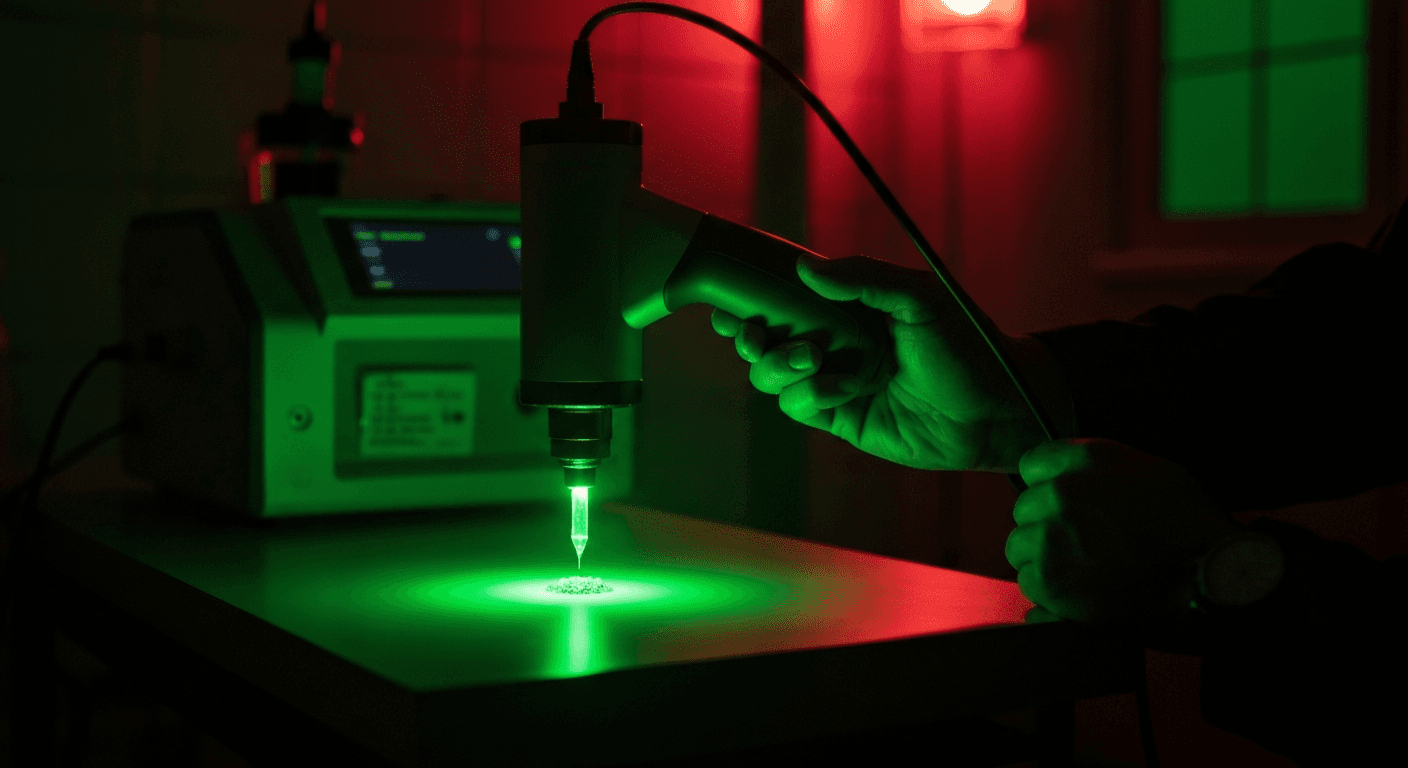
In 2024, 79,384 Americans died from drug overdoses. That is a 26.2% decline from 2023 - the largest single-year drop ever recorded - but overdose remains the leading cause of death for Americans aged 18 to 44. Eighty-eight percent of opioid deaths involved fentanyl or other synthetic opioids. And the threat is evolving: nitazenes, a class of synthetic opioids estimated to be up to 20 times more potent than fentanyl, showed a 17% rise in detection among fentanyl-positive samples between 2023 and 2024. Xylazine, a veterinary sedative that causes necrotic wounds, was found in 30% of seized fentanyl powder in 2023. Medetomidine, another veterinary sedative, is now appearing in fentanyl mixtures.
The standard drug testing toolkit was not designed for this. Immunoassay-based urine drug screens detect drug classes, not specific substances. They cannot distinguish fentanyl from carfentanil, cannot identify which nitazene analog is present, and produce false positives from structurally similar legal medications. Confirmatory testing by GC-MS or LC-MS/MS takes hours to days and requires laboratory infrastructure that emergency departments and field responders do not have.
Spectroscopy fills a specific gap in this landscape: rapid, specific identification of the actual substance present - not just the drug class, but the specific compound - in seconds to minutes, from a handheld device or a benchtop instrument. Raman spectroscopy identifies substances through molecular fingerprinting. FTIR provides complementary structural information. SERS and EC-SERS push detection limits into the nanogram-per-milliliter range for trace analysis. Together, these techniques are reshaping how drugs are identified in emergency, forensic, and harm reduction settings.
Why Traditional Drug Testing Falls Short
Immunoassay Limitations
Point-of-care immunoassay drug screens (urine cups, lateral flow strips) are the standard in emergency departments. They are fast (5–15 minutes), cheap ($1–5 per test), and require no technical expertise. But they have fundamental limitations that the synthetic opioid crisis has exposed.
- Class-level detection only. Immunoassays use antibodies that bind to structural motifs shared across a drug class. An "opiate" panel detects morphine, codeine, and heroin but may miss fentanyl entirely - fentanyl is structurally dissimilar to natural opiates. Dedicated fentanyl immunoassays exist, but they cannot identify which fentanyl analog is present, and their cross-reactivity with novel analogs varies unpredictably.
- False positives. Diphenhydramine, lidocaine, MDMA, and methamphetamine can produce false-positive results on immunoassay panels. In an emergency department where treatment decisions depend on accurate identification, a false positive for fentanyl can lead to unnecessary naloxone administration, while a false negative can delay life-saving treatment.
- No mixture analysis. Polysubstance use is the norm, not the exception. A patient presenting with an overdose may have consumed fentanyl, xylazine, methamphetamine, and benzodiazepines simultaneously. Immunoassays test for each class independently and cannot characterize the mixture composition.
The GC-MS/LC-MS Gap
Gas chromatography-mass spectrometry (GC-MS) and liquid chromatography-tandem mass spectrometry (LC-MS/MS) are the gold standards for definitive drug identification. They separate mixtures chromatographically and identify each component by mass spectrum. Sensitivity is excellent (nanogram-per-milliliter range), and specificity is near-perfect.
But the workflow is incompatible with emergency medicine:
- GC-MS requires 10 to 30 minutes of instrument time per sample, plus sample preparation
- Instruments cost $100K to $500K, require trained operators, and live in centralized laboratories
- State crime labs face severe backlogs - Colorado reported average toxicology turnaround of 99 days in 2025
By the time the GC-MS result arrives, the clinical decision has long since been made.
Handheld Raman Devices for Field Identification
Handheld Raman spectrometers are the most mature spectroscopy-based drug identification technology in field deployment. Multiple devices are commercially available, deployed in all 50 US states and over 50 countries.
The Device Landscape
| Device | Manufacturer | Laser | Library | Key Capabilities |
|---|---|---|---|---|
| TruNarc Delta/Tau | Thermo Fisher | 785 nm | 1,200+ substances | Point-and-shoot, results in seconds. Scans through sealed glass and plastic. Type H2 testing for fluorescent substances and low-concentration mixtures. Launched May 2025. |
| ResQ CQL / Narc-ID | Rigaku | 1064 nm | 12,000+ compounds | 1064 nm laser reduces fluorescence interference. Bulk and trace analysis (QuickDetect). MIL-STD certified, waterproof, operates −20°C to +50°C. |
| MIRA XTR DS | Metrohm | 785 nm | 24,000+ materials | Most compact handheld Raman on market. Built-in SERS capability for microdose fentanyl detection. Library includes hundreds of fentanyl types. |
| Progeny | Rigaku | 1064 nm | Large | 1064 nm excitation minimizes fluorescence. Designed for lab, warehouse, and mobile lab use. |
The key technical trade-off is laser wavelength, which we cover in depth in our Raman clinical integration guide. Devices with 785 nm lasers (TruNarc, MIRA) produce stronger Raman signals for most substances, but colored or fluorescent samples - common in street drugs - can overwhelm the Raman signal with fluorescence. Devices with 1064 nm lasers (Rigaku ResQ, Progeny) largely avoid fluorescence interference but produce weaker Raman signals, requiring longer acquisition times or more sensitive detectors.
TruNarc Delta and Tau
Thermo Fisher's TruNarc is the most widely deployed handheld Raman narcotics analyzer globally. The next-generation TruNarc Delta (US market) and TruNarc Tau (global market), launched in May 2025, represent a significant upgrade:
- Library expanded to over 1,200 substances, with regular updates for emerging threats including nitazenes and novel synthetic opioids
- Type H2 testing mode specifically designed for fluorescent substances and low-concentration mixtures - addressing the two scenarios where previous-generation handheld Raman devices struggled most
- Through-container scanning - identifying substances inside sealed glass vials, plastic bags, and blister packs without opening them, reducing exposure risk for officers and first responders
The original TruNarc has been deployed in all 50 US states and more than 50 countries since 2012, identifying 324 prohibited substances in under 30 seconds.
MIRA XTR DS: Raman + SERS in One Device
Metrohm's MIRA XTR DS is notable for combining conventional Raman and SERS capability in a single handheld instrument. For bulk substance identification, it operates as a standard 785 nm Raman device with a library of over 24,000 materials. For trace detection - identifying microdose fentanyl contamination on surfaces or in mixtures where the target substance is present at low concentrations - it switches to SERS mode using disposable SERS substrates. The fentanyl-specific library includes hundreds of fentanyl types and analogs.
Limitations of Handheld Raman
Handheld Raman excels at identifying the dominant component of a sample. It struggles with:
- Mixtures where the target is a minor component. A sample that is 95% mannitol and 5% fentanyl will produce a spectrum dominated by mannitol. The fentanyl signal may be below the detection threshold of the library matching algorithm.
- Highly fluorescent matrices. Despite 1064 nm options, some cutting agents and adulterants produce intense fluorescence that masks the Raman signal entirely.
- Trace-level contamination. Conventional Raman (without SERS) typically requires the target substance to be present at roughly 1% by weight or higher for reliable identification.
For these scenarios, SERS and EC-SERS provide the solution.
ATR-FTIR and GC-FTIR for Laboratory Analysis
FTIR spectroscopy plays a complementary role to Raman in drug identification, particularly in forensic laboratory settings.
ATR-FTIR for Bulk Analysis
ATR-FTIR is a SWGDRUG Category A technique - the highest level of discriminating power recognized by the Scientific Working Group for the Analysis of Seized Drugs. A small amount of powder is pressed onto the ATR crystal, and the infrared absorption spectrum is recorded in one to five minutes. Library matching against reference databases identifies the substance.
ATR-FTIR is standard equipment in forensic drug labs worldwide. Its advantages over Raman for drug identification include lower cost per instrument, no fluorescence interference, and well-established reference libraries. Its limitations: it requires direct contact with the sample (increasing exposure risk), cannot scan through packaging, and struggles to differentiate between closely related fentanyl analogs whose ATR spectra are nearly identical.
A 2025 study from Texas Tech University (Barney et al., published in Sensors) demonstrated an innovative application: ATR-FTIR combined with machine learning to detect fentanyl exposure in human nail samples, achieving 84.8% accuracy with PLS-DA and 81.4% with SVM-DA. This has clinical implications for retrospective exposure assessment - identifying patients with chronic fentanyl exposure from a noninvasive nail clipping.
GC-FTIR: The Isomer Discriminator
Where ATR-FTIR falls short on fentanyl analog differentiation, gas chromatography coupled with vapor-phase FTIR (GC-FTIR) excels. This is a critical capability because positional isomers of fentanyl analogs - molecules with the same molecular formula and mass but different structural arrangements - produce indistinguishable mass spectra on GC-MS. They cannot be differentiated by mass spectrometry alone.
GC-FTIR separates them reliably. Ferguson et al. analyzed 212 different fentanyl analogs using GC-vapor phase infrared spectroscopy, demonstrating reliable isomer discrimination through spectral library matching. Vapor-phase IR spectra show significant differences from condensed-phase spectra, particularly in the fingerprint region, making GC-FTIR more discriminating than ATR-FTIR for structurally similar analogs.
This capability is critical for forensic prosecution. The legal scheduling of controlled substances in many jurisdictions is isomer-specific - a given positional isomer may be scheduled while a closely related isomer is not. Definitive isomer identification can determine whether a seized substance constitutes a controlled substance under the applicable statute.
Portable FTIR
Handheld FTIR devices exist for field use - notably the Smiths Detection HazMatID Elite and the Agilent 4300 Handheld FTIR. Both produce results in under one minute and are deployed by first responders and hazmat teams. They are accurate for pure substances but less reliable for mixtures than their Raman counterparts, primarily because ATR-FTIR spectra of mixtures show overlapping absorption bands that are harder to deconvolve than the sharper Raman peaks.
EC-SERS for Trace Detection
Electrochemical surface-enhanced Raman spectroscopy (EC-SERS) bridges the gap between handheld Raman's convenience and mass spectrometry's sensitivity. The technique was developed primarily by Edward Sisco's group at NIST in collaboration with the Maryland State Police and West Virginia University.
How EC-SERS Works
Standard SERS uses metallic nanostructures (gold or silver nanoparticles, roughened metal surfaces) to amplify the Raman signal through electromagnetic and chemical enhancement mechanisms. EC-SERS adds electrochemistry: applying a voltage to a metallic screen-printed electrode simultaneously creates SERS-active hotspots on the electrode surface and concentrates the target analyte at the surface through electrostatic attraction. The combined effect produces dramatic signal amplification from minimal sample quantities.
The practical advantages over conventional SERS:
- Disposable electrodes. Screen-printed electrodes cost roughly $1-5 each. No expensive nanoparticle substrates to prepare or purchase.
- Electrochemical selectivity. Scanning across different applied voltages (cyclic voltammetry) produces voltage-dependent SERS spectra that provide additional discriminating information - some drugs show spectral changes at specific voltages that others do not.
- Low sample volume. A microliter-scale sample dissolved in buffer is sufficient.
Fentanyl Detection Performance
The foundational publication (NIST, 2023) established EC-SERS performance for forensic drug analysis:
- Detection limit: 10 ng/mL for the most sensitive fentanyl compounds
- Mixture detection: Successfully identified fentanyl in mixtures where it comprised as little as 1% to 5% of total composition
- Overall screening accuracy: Approximately 88% for fentanyl in authentic seized drug casework samples
- Outperformed color tests (Marquis, Mandelin) for fentanyl-containing samples
A 2024 follow-up expanded EC-SERS to a nontargeted screening method, using cyclic voltammetry to scan across the full potential window. This enables identification of an entire panel of drugs of abuse and adulterants from a single measurement without pre-selecting a target analyte - a significant advance over the original targeted approach.
Advanced SERS Substrates
Research groups are pushing SERS detection limits far beyond what EC-SERS achieves:
| Substrate | Research Group | Detection Limit | Matrix |
|---|---|---|---|
| Silver-coated gold nanostars | Atta, Canning, Vo-Dinh (Duke University) | 10.02 pg/mL | Spiked urine (92.5–102% recovery) |
| Superabsorbing metasurfaces + ML | npj Nanophotonics group | µg/mL range, field enhancement 2.19×10⁷ | Fentanyl-heroin mixtures, saliva |
| MOF-gold core-satellite nanostructures | NH₂-MIL-101(Fe) + AuNPs | Sub-µg/mL | Complex matrices |
The Vo-Dinh group at Duke University achieved 10.02 pg/mL detection of fentanyl using bimetallic nanostars - roughly 1,000 times more sensitive than EC-SERS and approaching the sensitivity of LC-MS/MS. These substrate technologies are still in the research phase, but they demonstrate that SERS sensitivity is not fundamentally limited for drug detection applications.
Machine Learning for Drug Classification
The spectral library matching approach used by handheld devices (correlation-based comparison against a reference library) works for pure substances but degrades with mixtures, low concentrations, and novel analogs not in the library. Machine learning classification addresses these limitations.
Recent Advances
Global-Local Multi-Scale CNN (2025). Trained on 236 new psychoactive substance (NPS) standard samples and tested on 520 real seized samples. Achieved 100% accuracy on fentanyl analogs in validation and 99.43% weighted accuracy on real-world seized drug samples. Published in Microchemical Journal.
SENet + ResNet34 for Synthetic Cannabinoids (2025). Squeeze-and-Excitation Network attention mechanism integrated into ResNet34 achieved 100% classification accuracy for six synthetic cannabinoid analogs from Raman spectra. The attention mechanism allows the network to focus on the most discriminating spectral features - critical when distinguishing between closely related analogs.
ATR-FTIR + PLS-DA for Fentanyl Exposure (2025). Barney et al. applied PLS-DA and SVM-DA to ATR-FTIR spectra of human nail samples, achieving 84.8% and 81.4% accuracy respectively for detecting chronic fentanyl exposure.
Neural Network for Community Drug Checking (2023). A neural network model trained on FTIR spectra predicts fentanyl presence in community-submitted drug samples, enabling real-time harm reduction services.
The trend is clear: ML models trained on spectral data are surpassing traditional library matching for complex, real-world drug identification tasks. The 99.43% accuracy on seized samples - not lab standards, but actual street drugs with unknown adulterants and cutting agents - demonstrates that the models generalize beyond the training distribution.
Emergency Department Workflow
Spectroscopy-based drug identification in the emergency department is still early-stage. No FDA-cleared Raman or FTIR device exists for clinical drug toxicology screening, and immunoassay panels remain the standard of care. But the clinical need is clear, and several integration models are emerging.
The Clinical Scenario
A patient arrives unconscious, with pinpoint pupils and respiratory depression. The clinical team administers naloxone empirically. The patient responds - confirming opioid involvement - but the specific substance matters. Fentanyl overdoses may require repeated or continuous naloxone due to fentanyl's high receptor affinity. Xylazine does not respond to naloxone at all and requires supportive care. Nitazenes may require higher naloxone doses than fentanyl. Novel substances may have no established treatment protocol.
An immunoassay urine screen takes 5–15 minutes but tells the clinician only that "opioids" are present. A handheld Raman device scanning residual powder from the patient's belongings (with appropriate consent and safety precautions) identifies the specific substance in 15–60 seconds.
Integration Model
The practical deployment model for ED spectroscopy is not replacing immunoassay but augmenting it:
- Immunoassay for rapid class-level screening (opioids, benzodiazepines, stimulants)
- Handheld Raman for substance-specific identification of any physical sample (powder, pill, residue) available
- Clinical correlation - the treatment team integrates both results with the clinical presentation
This dual-track approach preserves the immunoassay's role (biological confirmation that the patient has the drug in their system) while adding Raman's strength (identifying exactly what substance was taken, even before the biological test results return).
Harm Reduction Settings
Drug checking services - where people who use drugs can have their substances tested before consumption - are the most active deployment setting for spectroscopy-based drug identification outside forensic labs. Programs in Rhode Island, Vancouver, and other jurisdictions deploy ATR-FTIR alongside fentanyl test strips for community drug checking. The Vancouver Island Drug Checking Project simultaneously deploys immunoassay strips, ATR-FTIR, Raman, and portable GC-MS, providing multilayer confirmation.
Forensic Laboratory Workflow
SWGDRUG Framework
The Scientific Working Group for the Analysis of Seized Drugs (SWGDRUG) provides the standard framework for forensic drug identification in the United States. Techniques are classified by discriminating power:
- Category A (highest): Infrared spectroscopy, Raman spectroscopy, mass spectrometry, NMR, X-ray diffractometry
- Category B: Capillary electrophoresis, GC, HPLC, microcrystalline tests, immunoassay
- Category C: Color tests, fluorescence spectroscopy, melting point, UV-Vis
Minimum identification standard: one Category A technique plus at least one additional technique from any category. In practice, the standard forensic workflow is: color test (presumptive) → GC-MS (confirmatory, Category A) → FTIR or Raman (supplementary Category A for isomer discrimination when needed).
The SWGDRUG mass spectral library version 3.13 contains 3,598 compounds and is maintained by the NIST Mass Spectrometry Data Center.
Addressing the Backlog
Forensic crime labs face severe backlogs driven by the volume of seized drug cases. The 99-day average turnaround reported in Colorado is not unusual. Spectroscopy-based screening directly addresses this through triage: handheld Raman or ATR-FTIR provides a rapid presumptive identification (Category A) at the point of seizure or during evidence intake, allowing the lab to prioritize cases and direct them to the appropriate confirmatory workflow.
Direct analysis in real time mass spectrometry (DART-MS) provides chromatography-free workflows for faster controlled substance testing. A 2025 rapid GC-MS method reduced total analysis time from 30 to 10 minutes, specifically designed to address forensic lab throughput. But spectroscopic screening remains the fastest front-end triage.
Chain of Custody and Reporting
Integrating spectroscopy results into the forensic evidence chain requires software that tracks:
- Instrument identification - serial number, calibration status, last verification date
- Operator identification - who performed the measurement, their qualifications
- Sample identification - evidence number, case number, chain of custody documentation
- Measurement parameters - laser wavelength, power, exposure time, library version
- Result - identified substance(s), match score, any ambiguities or limitations
- Audit trail - timestamped, unalterable record of every action
The UNODC has published guidelines specifically for the use of Raman handheld field identification devices in drug analysis, providing a framework for evidence documentation and result interpretation.
Comparison: Methods for Drug Identification
| Method | Speed | Sensitivity | Specificity | Cost/Test | Portable | Mixture Analysis |
|---|---|---|---|---|---|---|
| Immunoassay (strips) | 5–15 min | Moderate (µg/mL) | Low (false positives common) | $1–5 | Yes | No (single class) |
| Color tests | 1–5 min | Low | Low | under $1 | Yes | Very poor |
| Handheld Raman | 15–60 sec | Moderate (~1% w/w) | High (Category A) | Device: $25–50K; per-test: minimal | Yes | Limited (dominant component) |
| ATR-FTIR | 1–5 min | Moderate (~1% w/w) | High (Category A) | Device: $15–40K; per-test: minimal | Semi-portable | Limited |
| EC-SERS | 5–10 min | High (10 ng/mL) | High (~88% accuracy) | Electrodes: $1–5 each | Yes | Moderate |
| GC-MS | 10–30 min | High (ng/mL) | Very high | Device: $100–300K; per-test: $20–50 | Some portables | Excellent |
| LC-MS/MS | 15–45 min | Very high (pg/mL) | Very high | Device: $200–500K; per-test: $50–100 | No | Excellent |
| Advanced SERS | 5–10 min | Very high (pg/mL) | High | Substrates: $5–20 each | Some | Moderate |
Raman and FTIR occupy the sweet spot between immunoassay (fast and cheap but nonspecific) and mass spectrometry (definitive but slow and expensive). SERS is closing the sensitivity gap with mass spectrometry while retaining the portability and speed advantages of handheld spectroscopy.
The MX908 Context
908 Devices' MX908 deserves mention as context, though it is not a spectroscopic technique. This handheld mass spectrometer claims sensitivity up to one million times greater than Raman or FTIR, classifies over 2,000 fentanyl analogs, and is gaining traction in law enforcement - Texas DPS awarded a $2 million contract for MX908 units in April 2024. It represents the upper bound of what portable analytical instrumentation can achieve and sets the competitive benchmark for advanced SERS techniques.
Where This Is Heading
Spectroscopy-based drug identification is already deployed at scale for field screening and is expanding into clinical and harm reduction settings. The near-term trajectory:
Library updates as an ongoing arms race. The drug supply evolves continuously - new analogs, new adulterants, new cutting agents. Handheld Raman devices are only as good as their spectral libraries. Thermo Fisher, Rigaku, and Metrohm all provide regular library updates, but there is an inherent lag between a novel substance appearing on the street and its inclusion in a reference library. Machine learning approaches - particularly few-shot learning and one-class classification - will increasingly supplement library matching for novel analog detection.
EC-SERS commercialization. The NIST/Sisco group's EC-SERS work has demonstrated the technique's viability on real-world seized drug samples. The next step is commercial instrumentation - a portable EC-SERS device with disposable screen-printed electrodes that delivers 10 ng/mL detection limits for fentanyl in the field. The electrode cost ($1-5) and workflow simplicity (drop sample on electrode, apply voltage, read spectrum) make this feasible as a field-deployable trace detection system.
Clinical drug toxicology. No FDA-cleared spectroscopy device exists for clinical drug identification - this is a significant gap and an opportunity. The clinical need is clear: emergency physicians need to know what substance a patient has taken, not just which drug class. The regulatory path is straightforward for devices that identify substances from physical samples (powder, pills) - this is a simpler regulatory claim than biological sample testing. A 510(k) or De Novo submission for a handheld Raman device indicated for emergency clinical use could open a new market.
Integration with clinical workflows. As spectroscopy-based drug identification moves from forensic labs and roadside stops into emergency departments and harm reduction services, the software integration requirements grow:
- Results need to flow into electronic health records
- Chain of custody must be maintained for any sample with forensic implications
- The identification software must interface with poison control databases, clinical decision support systems, and public health surveillance networks
This is the clinical workflow infrastructure challenge we address through our clinical workflow platform and across our clinical workflow architecture and LIMS integration guides.
The fentanyl crisis created the urgency. The spectroscopy is mature. The remaining gap is the software and workflow infrastructure that puts specific substance identification into the hands of the clinicians, first responders, and forensic scientists who need it most - at the speed their work demands.
Further Reading
- Integrating Raman Spectrometers into Clinical Workflows - vendor APIs, data formats, and integration architecture
- FTIR vs. Raman vs. NIR for Diagnostics - modality comparison for analytical applications
- Building AI Pipelines for Spectral Classification - ML pipeline design for spectral data
- SERS for Point-of-Care Diagnostics - SERS substrate technologies and clinical applications
- Raman Spectroscopy for Rapid Bacterial ID and AST - another clinical application of Raman spectroscopy
- Spectroscopy-Based Liquid Biopsy - FTIR and SERS for cancer detection from blood