
 SpectraDx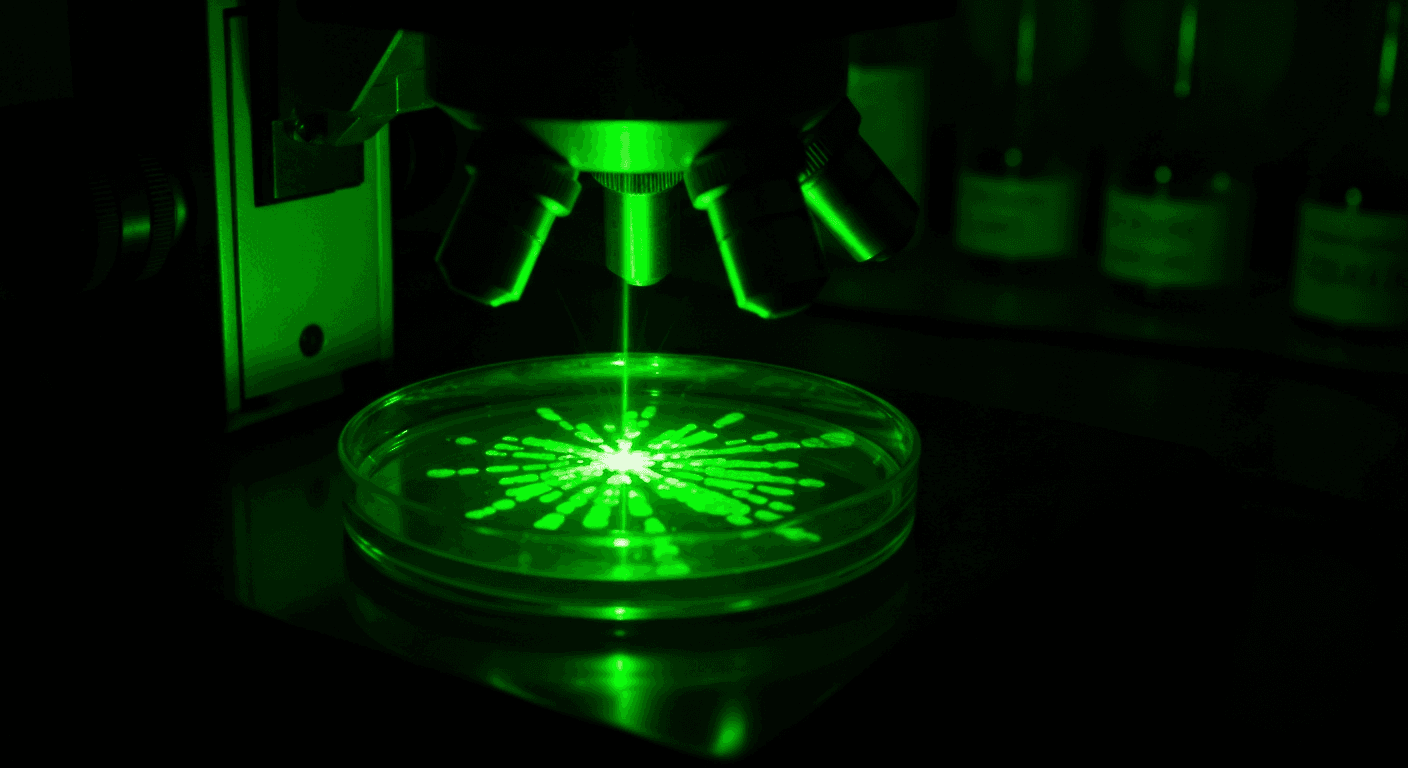
Antimicrobial resistance directly killed 1.14 million people in 2021. A landmark Lancet study published in September 2024 projects 39 million deaths directly attributable to bacterial AMR between 2025 and 2050 - roughly three deaths per minute, with annual toll rising from 1.14 million to 1.91 million by 2050. The WHO calls it one of the top ten global public health threats.
The root problem is time. When a patient presents with a bloodstream infection, the clinician needs to know which organism is causing it and which antibiotics will kill it. The standard workflow - blood culture followed by phenotypic antimicrobial susceptibility testing - takes 48 to 72 hours. During those hours, the clinician prescribes empirically, often using broad-spectrum antibiotics that may not cover the actual pathogen. Every hour of inappropriate antibiotic therapy in sepsis increases mortality by 7-10%. The delay drives overuse of broad-spectrum agents, which drives resistance, which makes the next infection harder to treat.
Raman spectroscopy can collapse that timeline from days to hours. Single-cell Raman spectroscopy identifies bacterial species from their molecular fingerprint in minutes. Heavy-water labeling detects metabolic response to antibiotics in two to four hours. SERS-based platforms are achieving 92% categorical agreement with standard AST on clinical isolates in under five hours. An AI-powered Raman identification system received FDA De Novo classification recommendation in October 2024.
This article covers the science, the clinical evidence, the named platforms, and the software integration challenges of deploying Raman-based bacterial identification and AST.
Why Current AST Is Too Slow
The standard clinical microbiology workflow has not changed fundamentally in decades:
- A blood sample arrives in the lab, gets loaded into an automated blood culture system (BacT/ALERT, BACTEC), and incubates until the system detects microbial growth - typically 12 to 36 hours, sometimes longer.
- Once flagged positive, the sample is subcultured onto agar plates for another 18 to 24 hours to isolate colonies. Only then can AST begin.
- Phenotypic AST - broth microdilution, disk diffusion, or automated systems like bioMérieux VITEK 2 or BD Phoenix - requires another 16 to 20 hours of incubation.
The total time from sample collection to AST result: three to five days.
Molecular methods (PCR-based panels like BioFire FilmArray, Cepheid GeneXpert) have compressed the identification step to one to two hours, detecting pathogen DNA directly from positive blood cultures. But molecular AST remains limited. PCR can detect known resistance genes (mecA for MRSA, vanA/B for VRE, carbapenemase genes), but it cannot detect novel resistance mechanisms, cannot provide MIC values, and misses phenotypic resistance that arises from regulatory mutations rather than acquired genes. Culture-based phenotypic AST remains the reference standard, and it remains slow.
This is the gap Raman spectroscopy is filling: phenotypic AST - measuring whether the organism actually dies in the presence of the antibiotic - at single-cell resolution, in hours instead of days.
How Raman Identifies Bacteria
When a laser beam strikes a bacterium, most photons scatter elastically (Rayleigh scattering). A small fraction - roughly one in ten million - scatter inelastically, losing or gaining energy corresponding to molecular vibrations within the cell. This inelastic scattering is the Raman signal. The resulting spectrum is a molecular fingerprint of everything in the cell: proteins, lipids, nucleic acids, carbohydrates, pigments, and cell wall components.
Different bacterial species have different molecular compositions. Staphylococcus aureus has a thick peptidoglycan cell wall that produces strong amide bands. Pseudomonas aeruginosa produces pyocyanin, a pigment with distinctive Raman features. Mycobacterium tuberculosis has a mycolic acid-rich cell wall with characteristic lipid signatures. These differences are subtle - often invisible to the human eye looking at raw spectra - but machine learning models trained on spectral libraries classify species with greater than 95% accuracy.
The key spectral regions for bacterial identification:
| Spectral Region | Wavenumber (cm⁻¹) | Molecular Origin |
|---|---|---|
| Nucleic acids | ~780 | Ring breathing of DNA/RNA bases |
| Phenylalanine | ~1003 | Aromatic ring breathing |
| Amide III | 1230–1300 | Protein secondary structure |
| CH₂ deformation | ~1450 | Lipids and proteins |
| Amide I | ~1660 | Protein backbone C=O stretch |
| C-H stretching | 2800–3100 | Lipid acyl chains |
A single-cell Raman spectrum takes 1 to 30 seconds to acquire, depending on laser power, wavelength, and the instrument. A 785 nm laser is the most common choice for biological samples - it balances Raman signal strength against fluorescence interference from biological chromophores.
The concept of the "ramanome" - the complete set of single-cell Raman spectra from a population - captures phenotypic heterogeneity that bulk measurements miss. Individual cells within a clonal population show spectral variation reflecting differences in growth phase, metabolic state, and stress response. This single-cell resolution is what makes Raman uniquely powerful for AST.
D₂O-Labeled Single-Cell Raman AST
The most elegant approach to Raman-based AST uses heavy water (D₂O) as a universal metabolic activity probe. The technique was pioneered by Wei E. Huang's group at the University of Oxford and has been developed in parallel by Jian Xu's group at the Chinese Academy of Sciences and Ji-Xin Cheng's group at Boston University.
The principle is simple. When bacteria are incubated in medium containing D₂O, metabolically active cells incorporate deuterium through NADPH/NADH-mediated hydrogen exchange. Deuterium replaces hydrogen in newly synthesized biomolecules, forming carbon-deuterium (C-D) bonds. These C-D bonds produce a Raman band in the "silent zone" between 2040 and 2300 cm⁻¹ - a spectral region where no other biological molecules have vibrational signatures. The C-D band intensity is directly proportional to metabolic activity.
The AST logic follows directly:
- Incubate bacteria with an antibiotic in D₂O-containing medium
- If the antibiotic is effective (susceptible), metabolic activity drops and the C-D band is absent or weak
- If the bacterium is resistant, metabolism continues and the C-D band appears
As little as 5% deuterium incorporation is detectable by Raman, meaning the assay can detect metabolic inhibition long before it would be visible as growth inhibition on an agar plate.
FRAST: Fast Raman-Assisted Antibiotic Susceptibility Test
The clinical translation of D₂O-Raman AST is FRAST (Fast Raman-Assisted Antibiotic Susceptibility Test), published in Analytical Chemistry in 2021 by Yi, Song, and colleagues at the Suzhou Institute of Biomedical Engineering and Technology (Chinese Academy of Sciences), Huashan Hospital (Fudan University), and the University of Oxford.
FRAST demonstrated:
- Urine samples: 3-hour total assay time from sample receipt to susceptibility result
- Blood/sepsis samples: 21 hours (dominated by the blood culture step)
- Overall agreement with conventional AST: 88.0%
Earlier work from the same collaboration (published in Analytical Chemistry, 2019) established a 2.5-hour total assay time from urine sample receipt to binary susceptible/resistant classification. Stimulated Raman scattering (SRS) microscopy, developed by Ji-Xin Cheng's group, achieved single-cell MIC determination in 2.5 hours from lab isolates.
The most recent result: a 2025 study demonstrated D₂O-Raman AST for carbapenem-resistant Klebsiella pneumoniae (CRKP) across 57 clinical strains, generating 30,000 single-cell spectra. The result: 100% categorical agreement with the VITEK-2 reference method, with a roughly two-hour turnaround.
A separate 2025 study published in Open Biology reported a 1.5-hour Raman + MTT assay for MIC determination in E. coli and K. pneumoniae against ampicillin, kanamycin, and levofloxacin - one of the fastest turnaround times published for phenotypic AST.
SERS-Based Approaches
Surface-enhanced Raman spectroscopy amplifies the Raman signal by factors of 10⁶ or more using metallic nanostructures. For bacterial AST, this amplification enables detection from smaller sample volumes and shorter incubation times than conventional Raman.
SERS-Uni-AST
The most significant recent advance is SERS-Uni-AST, a species-independent SERS platform published in Analytical Chemistry in 2025. The name captures the key innovation: unlike most Raman AST methods, SERS-Uni-AST does not require prior species identification. It monitors metabolic responses to antibiotics through label-free SERS detection.
Clinical validation results:
- 191 clinical blood-culture isolates encompassing 43 bacterial species
- 7 clinically relevant antibiotics tested
- 92% categorical agreement with standard broth microdilution
- Turnaround: approximately 5 hours after Gram staining (1 hour sample preparation, 3 hours antibiotic incubation, 1 hour SERS measurement and analysis)
- Comparison: conventional culture-based AST from the same starting point requires 27 to 33 hours
The species-independence is particularly valuable. In a clinical microbiology lab, species identification and AST are typically sequential - you need to know what organism you are testing before selecting appropriate antibiotics and interpretive breakpoints. SERS-Uni-AST bypasses this by monitoring the universal metabolic response (cellular biochemical changes detectable by SERS) rather than species-specific markers.
SERS for UTI Diagnostics
SERS analysis of urinary tract infection clinical isolates has achieved strain-level identification with greater than 95% sensitivity and greater than 99% specificity using PLS-DA classification, with appropriate antibiotic susceptibility information delivered in under one hour.
Deep Learning Integration
Vision Transformer (ViT) models integrated with bacterial SERS spectral analysis have demonstrated rapid, label-free prediction of antibiotic resistance - identifying Gram type, species, and resistant strains from SERS spectra without the need for culture or biochemical assays.
Current State of Evidence
| System / Study | Year | Sample Type | Organisms | Key Performance | Time-to-Result |
|---|---|---|---|---|---|
| SERS-Uni-AST | 2025 | 191 blood culture isolates | 43 species, 7 antibiotics | 92% categorical agreement | ~5 hours |
| D₂O Raman CRKP | 2025 | 30,000 single-cell spectra, 57 strains | K. pneumoniae | 100% agreement with VITEK-2 | ~2 hours |
| Raman + MTT MIC | 2025 | Lab isolates | E. coli, K. pneumoniae | MIC determination | 1.5 hours |
| AIRDIS (MRSA prediction) | 2025 | Clinical isolates | S. aureus | 88% accuracy, AUROC 0.92 | Same day |
| AIRDIS (CRKP prediction) | 2025 | Clinical isolates | K. pneumoniae | 87% accuracy, AUROC 0.96 | Same day |
| TB Raman-ML (PNAS) | 2024 | BCG strains + sputum | M. tuberculosis | 98% lab accuracy, ~79% from sputum | Hours (no incubation) |
| BSI CNN-Raman | 2024 | Blood culture | Multiple pathogens | 98.68% pathogen ID | Same day |
| FRAST | 2021 | Clinical urine + blood | Multiple | 88.0% agreement | 3h (urine), 21h (blood) |
| SRS-D₂O (Cheng) | 2020 | Lab isolates | Multiple | Single-cell MIC | 2.5 hours |
| SERS UTI | 2017 | UTI clinical isolates | Multiple | 95%+ sens, 99%+ spec | under 1 hour |
The pattern is clear: Raman-based AST consistently demonstrates two- to five-hour turnaround with 88 to 100% agreement against reference methods. The evidence base is growing, but most studies remain single-center with fewer than 200 isolates. Large multicenter trials are the next step.
Named Platforms and Research Groups
AIRDIS
The Artificial Intelligent Raman Detection and Identification System (AIRDIS) is the most advanced Raman-based bacterial identification platform in the FDA regulatory pipeline. It combines Raman spectroscopy with machine learning for species identification and antibiotic resistance prediction.
AIRDIS identifies five ESKAPE pathogens (S. aureus, E. faecium, K. pneumoniae, P. aeruginosa, A. baumannii) and predicts MRSA (88% accuracy, AUROC 0.92) and carbapenem-resistant K. pneumoniae (87% accuracy, AUROC 0.96). The FDA recommended De Novo classification for AIRDIS (device C240069) on October 15, 2024 - if granted, this would establish a new device classification for AI-powered Raman-based bacterial identification. It is designed as a cost-effective solution for small to medium-sized hospitals.
Key Research Groups
| Researcher | Institution | Contribution |
|---|---|---|
| Wei E. Huang | University of Oxford | D₂O-Raman AST (FRAST), Raman-FISH, clinical translation for UTI and bloodstream infections |
| Jian Xu | Qingdao Institute of Bioenergy, Chinese Academy of Sciences | Ramanome platform, Raman-activated cell sorting (RACS), Raman flow cytometry |
| Ji-Xin Cheng | Boston University | Stimulated Raman scattering (SRS) microscopy for single-cell D₂O AST |
| Jürgen Popp | Leibniz IPHT / Friedrich Schiller University Jena | Raman standardization for clinical microbiology, MicrobioRaman database |
Other Notable Efforts
Vivid Dx is developing a Raman spectroscopy platform for sepsis pathogen identification, using a proprietary spectral database combined with AI/ML to read biochemical fingerprints of single cells from blood. The platform is in the pre-commercial stage.
The Ramanome Technology Platform from Jian Xu's group at the Chinese Academy of Sciences developed the world's first Raman-activated cell sorting and sequencing (RACS-Seq) instrument, enabling both identification and functional characterization of individual bacterial cells.
Software Integration Challenges
Deploying Raman-based bacterial ID and AST in a clinical microbiology lab is not just a spectroscopy problem - it is a workflow integration problem. As we cover in our guide to Raman clinical integration with Horiba, Renishaw, and handheld devices, the vendor landscape is fragmented and each instrument requires a different driver implementation. The instrument must connect to the laboratory information system. Results must flow into the electronic health record. The entire process must fit into the technologist's existing workflow without adding significant hands-on time.
Real-Time Spectral Acquisition
Single-cell Raman measurements generate spectra at rates of one to ten spectra per second, depending on exposure time. For a typical AST assay measuring 100 cells per antibiotic condition across four antibiotics, that is 400 to 4,000 spectra per patient sample. Each spectrum contains 1,024 to 2,048 data points. The acquisition software must handle this throughput in real time - buffering spectra, running quality checks (signal-to-noise ratio, fluorescence level, cosmic ray detection), and flagging failures for re-acquisition.
Automated Spectral Classification
The classification pipeline runs in two stages. First, species identification from the spectral fingerprint - this uses models trained on reference spectral libraries and must handle the variability inherent in clinical samples (different growth phases, different media, different patient backgrounds). Second, susceptibility classification from the D₂O incorporation or metabolic response signal - this requires robust baseline correction in the C-D silent zone and threshold-based or model-based susceptible/resistant calling.
Both stages must run without human intervention. A clinical microbiology technologist cannot manually review 400 Raman spectra per sample. The software must deliver a result: organism identity, confidence score, and susceptible/intermediate/resistant classification per antibiotic tested. For details on building these ML pipelines, see our spectral classification guide.
LIMS and EHR Integration
The result must reach the clinician. In a hospital microbiology lab, that means generating structured messages - HL7v2 ORU^R01 for legacy LIS systems, FHIR DiagnosticReport for modern interfaces. The message must contain the organism identification, the antibiotics tested, the MIC or categorical result for each, and the interpretive category (S/I/R) based on current CLSI or EUCAST breakpoints.
This is the same integration challenge we describe in detail in our clinical workflow architecture and HL7v2 integration guide. The Raman-specific wrinkle is the confidence score: because Raman AST is a new method with limited clinical validation, many labs will want to run it in parallel with conventional AST during a validation period. The software must support dual-result reporting - the Raman-based rapid result flagged as preliminary, followed by the conventional result as confirmatory.
Spectral Database Standardization
One of the most critical gaps in clinical Raman microbiology is the lack of standardized spectral databases. Unlike MALDI-TOF, which has commercially maintained databases (Bruker Biotyper, bioMérieux VITEK MS) with thousands of validated reference spectra, Raman-based identification relies on institution-specific databases or research-grade collections like the MicrobioRaman database being developed by Jürgen Popp's group at Leibniz IPHT in Jena.
Standardization requires agreement on acquisition parameters (laser wavelength, power, exposure time, spectral resolution), preprocessing steps (baseline correction method, normalization), and reference strain panels. Without this, a model trained at one institution will not necessarily perform at another. European efforts led by Popp's group are working toward common Raman spectroscopy standards for clinical use - a critical prerequisite for regulatory acceptance and multi-site deployment.
Comparison: Culture-Based vs. Raman-Based AST
| Parameter | Conventional Culture-Based AST | Raman-Based AST (best demonstrated) |
|---|---|---|
| Time from positive culture to AST result | 34–44 hours (subculture + AST) | 2–5 hours |
| Total time from sample receipt (blood) | 3–5 days | 5 hours from positive culture |
| Total time from sample receipt (urine) | 1–2 days | 2.5–3 hours |
| Sample volume | Milliliters | Single cells (femtoliter-scale) |
| Species ID required first? | Yes (most systems) | No (SERS-Uni-AST is species-independent) |
| Novel resistance detection | Yes (phenotypic) | Yes (phenotypic - metabolic activity) |
| MIC determination | Yes (reference standard) | Emerging (SRS-D₂O, Raman + MTT) |
| Regulatory status | Established, FDA-cleared | AIRDIS in FDA De Novo (ID only); AST not yet cleared |
| Clinical evidence base | Decades of multicenter validation | Growing: single-center, under 200 isolates typical |
| Consumable cost per test | $5–15 (plates, disks, reagents) | $0.50–20 (D₂O, SERS substrates, or none) |
The core advantage of Raman AST is that it detects phenotypic drug resistance at the single-cell metabolic level within hours, rather than waiting for visible colony growth. This is particularly transformative for slow-growing organisms: conventional AST for Mycobacterium tuberculosis takes up to 40 days. A 2024 PNAS study demonstrated Raman-ML identification and resistance prediction for M. tuberculosis with 98% accuracy in the lab - with no antibiotic incubation required, because the model detects resistance-associated spectral signatures directly from the cell's molecular composition.
Where This Is Heading
Raman-based bacterial identification and AST is transitioning from academic proof-of-concept to clinical deployment, but it is not there yet. The AIRDIS FDA De Novo recommendation is a milestone - the first Raman-based bacterial identification system to reach this stage of regulatory evaluation. If cleared, it establishes the regulatory precedent that subsequent Raman-based diagnostics can follow.
The near-term trajectory is clear. Over the next two to three years, expect:
- Larger multicenter validation studies. The evidence base needs to expand from single-center studies of 50 to 200 isolates to multicenter trials of 1,000 or more. The 191-isolate SERS-Uni-AST study and the 57-strain CRKP study are steps in this direction, but regulatory clearance will require substantially larger datasets across diverse patient populations and clinical sites.
- Standardized spectral databases. The Popp group's MicrobioRaman effort and similar initiatives will produce consensus reference libraries and standardized acquisition protocols. Without these, every deployment is a custom build.
- Integration with existing blood culture systems. The practical deployment model is not a standalone Raman instrument replacing the microbiology lab. It is a Raman module that sits downstream of the existing blood culture system - when BacT/ALERT or BACTEC flags a positive bottle, the sample routes to the Raman system for rapid ID and AST while conventional culture proceeds in parallel. This dual-track approach gives clinicians rapid preliminary results while maintaining the gold-standard reference.
- Automation of the single-cell workflow. Current research-grade single-cell Raman requires manual positioning of the laser on individual cells under a microscope. Raman flow cytometry and Raman-activated cell sorting - both being developed by Jian Xu's group - automate this, enabling high-throughput single-cell analysis without operator intervention.
The bottleneck is not the spectroscopy. The physics works. The machine learning works. The clinical need is urgent. The bottleneck is the software and workflow infrastructure that connects the Raman instrument to the clinical microbiology laboratory - LIMS integration, standardized reporting, quality control, and the regulatory documentation that proves it all works reliably in the hands of clinical technologists, not PhD spectroscopists. A purpose-built clinical workflow platform that handles instrument abstraction, spectral preprocessing, and HL7/FHIR output is the missing piece.
Further Reading
- Integrating Raman Spectrometers into Clinical Workflows - vendor APIs, data formats, and integration architecture for Raman instruments
- FTIR vs. Raman vs. NIR for Diagnostics - how Raman compares to other spectroscopic modalities
- Building AI Pipelines for Spectral Classification - the ML pipeline behind spectral classification
- Building Clinical Workflow Software for Spectroscopy-Based Diagnostics - full system architecture for clinical spectroscopy
- SaMD Classification for Spectroscopy Software - regulatory implications of AI-powered diagnostic software
- Spectroscopy-Based Liquid Biopsy - another clinical application of spectral diagnostics
- Spectroscopy in the Emergency Department: Rapid Drug Identification - Raman for substance identification in clinical and forensic settings