SpectraDx
pectraDx
SpectraDxlight to insight
Fourier-Transform Infrared Spectroscopy

FTIR Clinical Workflow Software

Connect Bruker, Thermo Fisher, and Agilent FTIR spectrometers to clinical workflows. SpectraDx handles instrument control, spectral processing, ML classification, and HL7/FHIR output — so FTIR results reach clinicians in minutes, not hours.

Overview

What is FTIR in Clinical Diagnostics?

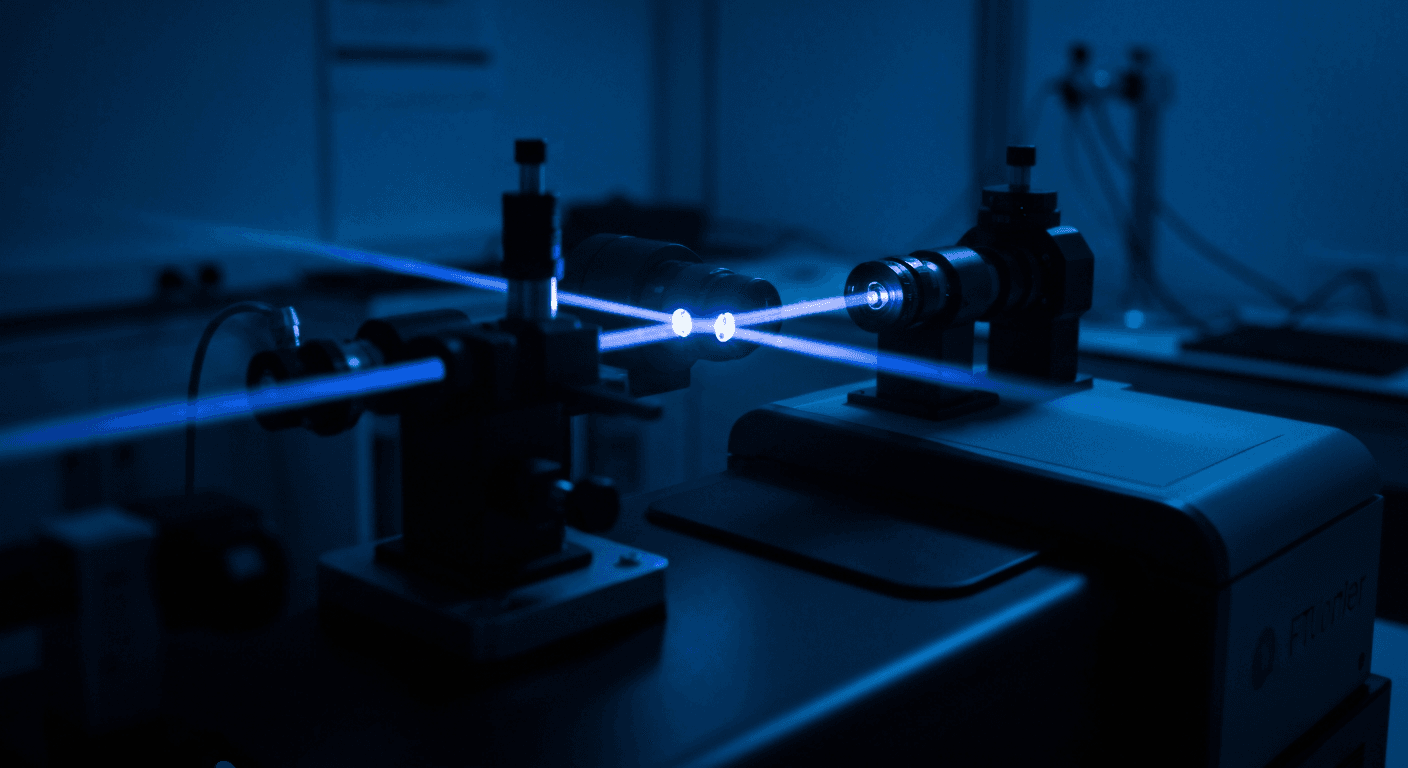
FTIR (Fourier-Transform Infrared) spectroscopy works by shining infrared light through a sample and measuring which wavelengths get absorbed. Different molecular bonds absorb at different frequencies, producing a unique chemical fingerprint for every substance — the same principle behind breathalyzers and airport explosive detectors, now applied to clinical diagnostics.

In clinical settings, FTIR enables rapid pathogen identification, tissue characterization for cancer screening, and unknown substance identification — all without reagents or consumables. A single measurement takes seconds, and the instrument requires minimal operator training compared to mass spectrometry or PCR.

The challenge isn't the spectroscopy — it's everything around it. FTIR instruments produce data files, not clinical results. Translating a spectrum into a diagnosis requires classification models, patient context, clinician-friendly reporting, and integration with hospital information systems.

Clinical Applications

Pathogen Identification

Rapid bacterial ID and antimicrobial resistance profiling from clinical isolates

Tissue Analysis

Intraoperative tissue characterization for surgical margin assessment and cancer screening

Drug Identification

Emergency department substance testing — identify unknown compounds in minutes

Biofluid Analysis

Cancer screening from blood serum using infrared spectral signatures

Instruments

Supported Instruments

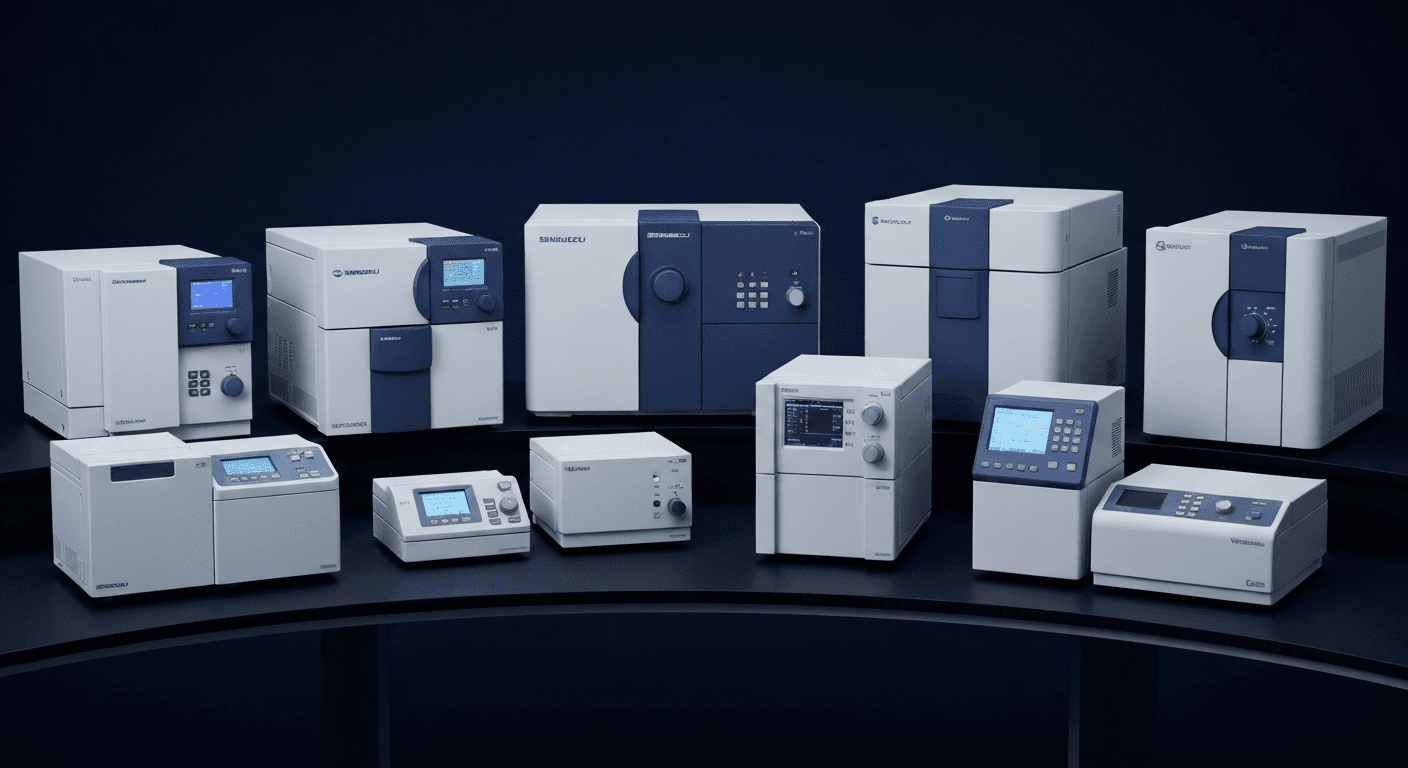
SpectraDx provides modular instrument adapters. Each adapter handles vendor-specific protocols so your clinical workflow stays consistent.

Bruker

Alpha II

Full DDE/Named Pipe integration via brukeropus library. Automated measurement, background collection, and data export.

Supported
Read integration guide →

Bruker

IR Biotyper

IR-based microbial identification system. Integration via REST API for automated clinical microbiology workflows.

In Development

Thermo Fisher

Nicolet iS50

OMNIC SDK integration for the Nicolet iS50 and iS20 series benchtop FTIR spectrometers.

Planned

Agilent

Cary 630

MicroLab integration for compact, diamond-ATR FTIR workflow automation.

Planned

PerkinElmer

Spectrum Two

Integration via PerkinElmer Spectrum SDK for portable FTIR applications.

Planned

The Problem

The Software Gap

Instrument vendor software like OPUS (Bruker), OMNIC (Thermo Fisher), Resolutions Pro (Agilent) is designed for research, not clinical deployment.

What vendor software provides

Spectral acquisition and measurement
Data visualization and analysis
Library search and matching
File export and format conversion

What clinical deployment requires

Patient identification and workflow
HL7/FHIR integration with LIS/EHR
Billing codes and reimbursement
Multi-site deployment and management
Clinician-friendly result interface
Regulatory audit trail (21 CFR Part 11)
Multi-vendor instrument support

Platform

How SpectraDx Works with FTIR

01

Instrument Control

Direct control of Bruker Alpha II via DDE/Named Pipes. Automated background collection, sample measurement, and spectral acquisition without manual software interaction.

Learn more →
02

Spectral Processing

Parse OPUS .0 files, apply preprocessing pipelines — baseline correction, normalization, derivatives — and extract features for clinical ML models.

Learn more →
03

Clinical ML Pipeline

Deploy trained classification models that convert preprocessed FTIR spectra into clinical decisions with calibrated confidence scores.

Learn more →
04

Results Integration

Send classified results via HL7v2 ORU messages or FHIR R4 DiagnosticReport resources directly to the hospital LIS/EHR.

Learn more →

Resources

FTIR Technical Resources

In-depth technical articles for FTIR integration, clinical workflows, and regulatory compliance.

Spectral Preprocessing for Clinical ML: Methods Compared
AI/ML

Spectral Preprocessing for Clinical ML: Methods Compared

Spectral preprocessing determines model performance more than architecture choice. SNV, MSC, Savitzky-Golay, EMSC, and rubberband correction compared.

Read article →
Spectroscopy Liquid Biopsy: FTIR and SERS Cancer Detection
Clinical

Spectroscopy Liquid Biopsy: FTIR and SERS Cancer Detection

Spectroscopy liquid biopsy is reaching clinical reality. Dxcover's FTIR blood test detects 64% of Stage I cancers, while SERS panels achieve 95% sensitivity.

Read article →

Spectroscopy Software Gap: Why Vendors Skip Clinical Workflow
Strategy

Spectroscopy Software Gap: Why Vendors Skip Clinical Workflow

No major spectroscopy software vendor builds clinical workflow tools. Six structural reasons explain why Bruker, Thermo, and Horiba leave this gap open.

Read article →
Spectral Data Formats: JCAMP-DX, SPC, and ANDI Compared
Architecture

Spectral Data Formats: JCAMP-DX, SPC, and ANDI Compared

Spectral data formats compared: JCAMP-DX, SPC, ANDI/netCDF, and vendor-specific binaries. Parsing code, support matrices, and a format decision framework.

Read article →
Thermo Fisher OMNIC Integration: Automating Nicolet FTIR and DXR Raman for Clinical Workflows
Integration

Thermo Fisher OMNIC Integration: Automating Nicolet FTIR and DXR Raman for Clinical Workflows

Thermo Fisher OMNIC integration covering the Paradigm SDK, legacy DDE and COM automation, file-based integration, and workflow tiles - with working code and clinical workflow patterns.

Read article →
FTIR Python Automation: A Practical Measurement Tutorial
FTIR

FTIR Python Automation: A Practical Measurement Tutorial

FTIR Python automation from spectral file parsing to measurement triggering via the OPUS DDE interface - a complete hands-on guide for Bruker instruments.

Read article →
Spectral Classification with ML: Building Clinical AI Pipelines
AI/ML

Spectral Classification with ML: Building Clinical AI Pipelines

Build a complete spectral classification pipeline for clinical diagnostics — preprocessing, feature extraction, model selection, validation, and deployment.

Read article →
Bruker OPUS Python Integration: Guide to All 5 Interfaces
FTIR

Bruker OPUS Python Integration: Guide to All 5 Interfaces

Bruker OPUS Python integration covering all five programmatic interfaces - DDE, Named Pipes, HTTP, OPC, and COM/ActiveX - with working code and examples.

Read article →
Building Clinical Workflow Software for Spectroscopy-Based Diagnostics
Architecture

Building Clinical Workflow Software for Spectroscopy-Based Diagnostics

Architecture decisions for wrapping lab instruments in clinician-facing UIs - from patient context and instrument control to ML classification and HL7 output.

Read article →
FTIR vs Raman vs NIR: Choosing a Point-of-Care Modality
Comparison

FTIR vs Raman vs NIR: Choosing a Point-of-Care Modality

FTIR vs Raman vs NIR compared for point-of-care diagnostics — acquisition speed, instrument APIs, preprocessing, ML models, and total deployment cost.

Read article →

Deploy FTIR-based diagnostics with SpectraDx

From Bruker OPUS files to clinical results in your EHR. One platform, zero middleware.